

By Daniel Leussink
TOKYO (Reuters) - Almost half of Japanese companies see the conflict between Israel and Palestinian militants Hamas potentially hitting their earnings, citing concerns about a further rise in oil and commodity prices, the latest Reuters corporate survey showed.
On the issue of ending negative interest rates, which have been a key pillar of Japan's central bank's accommodative monetary policy, nearly half of Japanese firms said they expected it to happen by the middle of next year.
Forty-eight percent of firms polled by Reuters said the Israel-Hamas conflict would affect their earnings negatively, the poll showed, roughly on par with the 49% who expected no particular impact and outstripping the 3% who saw a positive effect.
"Worsening of the Middle East situation will lead to a sharp rise in raw material and fuel prices," a manager at a chemical manufacturer wrote in the survey.
In the survey, 46% of firms that responded to a question about how much oil prices are likely to rise in the near future said they expected them to increase to $120 a barrel or higher. North Sea Brent crude is now around $81 a barrel.
The poll highlighted wider worries about conditions in the Middle East. Among concerns about instability in the Middle East, two-thirds of respondents cited rises in raw material prices other than oil.
About half of them said they feared more global inflation, while two-fifths saw potential shortages of oil products and those made of them, according to the survey.
The monthly Reuters Corporate Survey of 502 large and mid-sized non-financial Japanese firms, in which 251 responded, showed 46% of companies expected the Bank of Japan (BOJ) to end negative interest rates by the June 2024 quarter or earlier.
The BOJ last week eased its hold on long-term rates by watering down a 1% cap set for the 10-year yield as a reference rather a rigid ceiling.
Sources have said its next focus is to end its negative interest rate policy and push short-term rates to zero, from the current -0.1%.
In the survey, 40% of firms said the negative interest rate policy was having a positive impact on their companies' management.
The survey was conducted for Reuters by Nikkei Research on Oct. 24-Nov. 2, with firms responding on condition of anonymity to allow them to speak more freely.
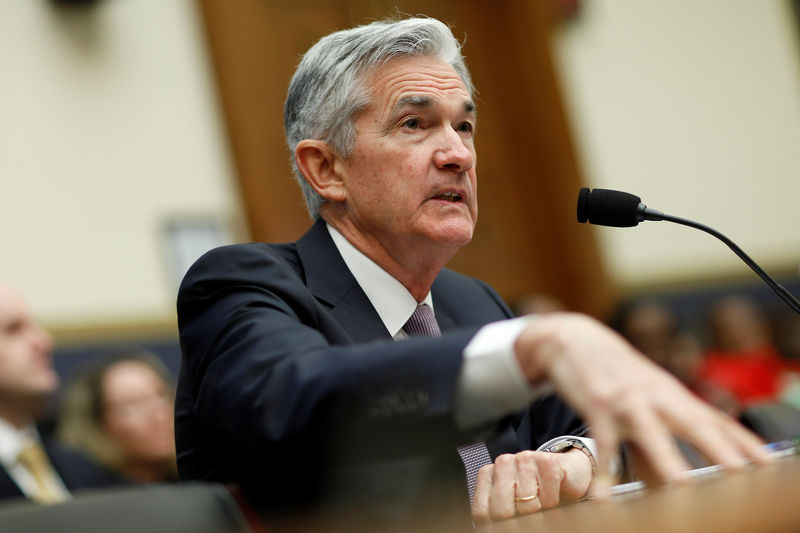
Investing.com -- Federal Reserve members on Tuesday downplayed expectations that era of rate hikes has ended, setting the stage for Fed chairman Jerome Powell to potentially deliver a hawkish push back against the recent easing in financial conditions.
Rate hikes remain on table
Federal Reserve Governor Michelle Bowman was among a slew of Fed members on Tuesday to remind market participants that bets on the Fed not lifting rates again were premature.
"I remain willing to support raising the federal funds rate at a future meeting should the incoming data indicate that progress on inflation has stalled or is insufficient to bring inflation to 2% in a timely way," Bowman said Tuesday.
Federal Reserve Bank of Chicago President Austan Goolsbee, meanwhile, acknowledged the recent progress on inflation, but said in an interview with CNBC on Tuesday that getting inflation down was" the No. 1 thing."
Treasury yields, financial conditions ease
The slew of remarks revived some investor attention on the prospect of a further rate hike, but with many still holding onto bets that the Fed hiking cycle is over, Treasury yields struggled to shake off their blues following the Fed's decision to keep rates unchanged last week as well as Powell's dovish press conference on Nov.1.
"Powell was dovish – downplaying recent strong U.S. data. This suggests that the bar for further hikes is quite high – and thus it is likely the end of the rate hikes, in our view," Nomura said in a note, ahead of remarks from the Fed chairman on Wednesday and Thursday.
The prospect of rate hike at the December and January meetings are slum at 10% and 15% respectively, according to Investing.com's Fed Rate Monitor Tool.
Will Powell pushback?
The overarching message from Fed speakers on whether higher Treasury yields will help them in their mission to curb inflation was to underscore that 'the why' rates have moved higher.
If higher Treasury yields are mostly tied to expectations of what the Fed will do next, then this isn't likely to filter into the Fed's thinking on future policy.
"The rise in longer-term rates that have moved up, can't simply be a reflection of expected policy moves from us," Powell said on Nov. 1. "if we didn't follow through on them, then the rates would come back down," he added.
Yet this appears to be scenario that is playing out. Chair Powell's dovish ‘careful’ act is "leading to lower US bond yields, thus reducing market concerns of a hard landing in the future," Nomura said.
The yield on 10-year Treasury fell 9 basis point to 4.569%, slipping further away from 5.021% cycle high seen last month, while the yield on the 10-year Treasury fell 10 basis point to 4.727%.
The somewhat hawkish push back from Fed members this week comes as some fear that the loosening in financial conditions, if sustained, could muddy the Fed's job to bring inflation down to target.
Powell, however, will have opportunity, if he wishes, to "clarify anything that he said this past week when his remarks prompted an easing of financial conditions, then this would be an opportunity to do so," Scotiabank Economics said in a Tuesday note.
Powell is set to deliver opening remarks before the Federal Reserve Division of Research and Statistics Centennial Conference at 9:15 ET on Wednesday and will participate in a panel discussion at 2pm on Thursday.

By Abhirup Roy and Akash Sriram
(Reuters) -Rivian Automotive raised its production forecast for the full year by 2,000 vehicles to 54,000 units on the back of sustained demand for its trucks and SUVs on Tuesday, sending its shares up 4% in volatile after-hours trading.
Rivian (NASDAQ:RIVN)'s upbeat forecast is a small positive for an industry reeling from the double whammy of high inflation that has dulled buyer appetite and price cuts at market leader Tesla (NASDAQ:TSLA) to stimulate demand.
Last month, Tesla CEO Elon Musk said he was concerned about the impact of high interest rates on car buyers, echoing caution from General Motors (NYSE:GM) and Ford (NYSE:F) amid fears of a slowdown in demand.
Smaller rival Lucid (NASDAQ:LCID) cut its production forecast on Tuesday "to prudently align with deliveries," sending its shares down 4%. It now expects to produce 8,000–8,500 vehicles this year, down from an earlier projection of more than 10,000.
"I'm actually surprised to be honest at how much we've seen others pull back," Rivian Chief Executive RJ Scaringe said in an interview with Reuters. "I think it's going to create, unfortunately, somewhat of a vacuum of products in the market."
He said that "shifts in buying behavior beyond the tail end of 2023" were not influencing Rivian's investment strategy for cheaper R2 vehicles that the company expects to launch in 2026.
After multiple quarters of supply chain problems, Rivian may be starting to turn a corner, some analysts have said. But the company shocked investors with an earlier-than-expected bond issuance last month that sent shares crashing.
On Tuesday, it trimmed its capital expenses and loss forecasts for the year. The company was cutting costs through negotiations with suppliers and updates to components and systems, Scaringe said.
Rivian will also stop production for a week this quarter to update its assembly line - which Scaringe said partly kept him from raising the annual production outlook even more - ahead of a bigger shutdown next year.
"Rivian showed resilience," said Alec Lucas, analyst at Global X. "Rivian appears to be benefiting from a more favorable commodity pricing environment, order book realization and progress toward scale."
He said Lucid's 2023 results "were reflective of efforts to scale production as well as an ongoing restructuring initiative."
Car prices at both Lucid, which is backed by Saudi Arabia's Public Investment Fund, and Amazon (NASDAQ:AMZN).com-backed Rivian start at more than $70,000. That is similar to Tesla's Model S luxury sedan, but much higher than the cheapest Tesla model at around $38,000.
Rivian has stayed away from cutting prices and has instead taken to making its Enduro powertrains in-house to reduce dependency on suppliers and slash costs.
The company previously said sales of its higher-priced SUVs have been strongly outpacing sales of its pickup truck R1T, improving the average selling price of its vehicles.
Last month, it reported third-quarter deliveries above market expectations.
Rivian also said on Tuesday it will end its exclusivity deal to largest shareholder Amazon for its electric delivery van, opening the door for more customers around the world, but reiterated its commitment to fulfilling the order of 100,000 vans to Amazon by 2030.
Rivian said was speaking with other customers that are interested in the Rivian Commercial Vehicle platform, which underpins its electric delivery vans, but declined to reveal any names.
Rivian's third-quarter revenue of $1.34 billion was largely in line with Wall Street estimates, while its quarterly loss narrowed from a year earlier.
Cash as of end-September was $7.94 billion, down from $9.26 billion three months prior.
Lucid's quarterly losses narrowed as well, but its revenue fell short of estimates. Production fell nearly 30% to 1,550 vehicles.
By Milounee Purohit and Anant Chandak
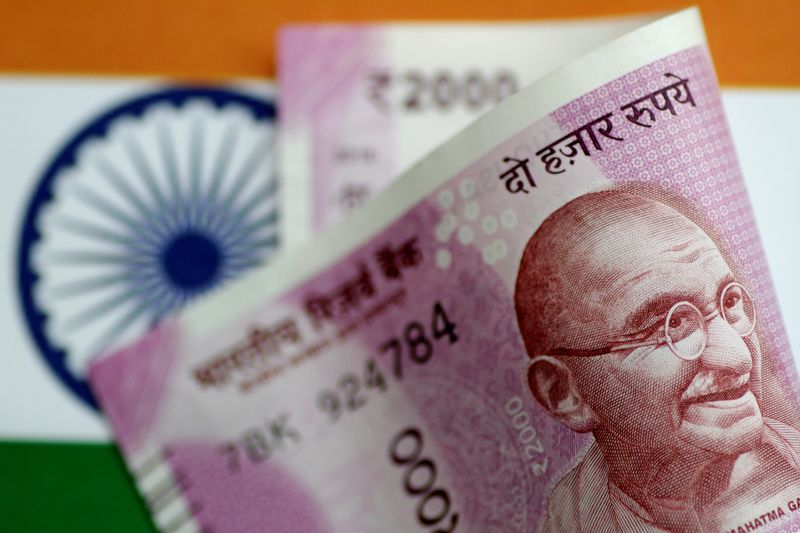
BENGALURU (Reuters) - The Indian rupee will trade near record lows against the dollar over the coming months, according to a Reuters poll of FX strategists who also said the Reserve Bank of India would likely intervene less in the coming year to support the currency.
India's economy is expected to expand 6.3% this fiscal year, the fastest-growing major economy in the world. But the rupee is not reflecting that optimism, having hit a record low of 83.29/$ earlier this month.
Thanks to the RBI's regular interventions in currency markets to arrest any sudden moves, the rupee has fared better than most of its Asian peers and was down just 0.6% for the year.
Although the recent decline in U.S. Treasury yields and weaker-than-expected U.S. economic data took some of the strength out of the dollar, the rupee was not expected to benefit much yet.
The latest Reuters poll of 42 foreign exchange analysts taken Nov. 3-7 suggested the rupee would trade around its current level of 83.25/$ in a month and 83.00/$ in three months.
However, over 30% of strategists, 13 of 42, still expect the rupee to touch a new low by end-January.
"We're not expecting it to rally as strongly as some of the other currencies that would be more freely-floating... because it's already stronger than perhaps fundamentally it would have been," said Robert Carnell, regional head of research, Asia Pacific at ING.
The rupee was then forecast to gain nearly 1% to 82.50/$ in six months and around 1.5% to 82.00/$ in a year. Forecasts for the 12-month period ranged from 80.00/$ to 85.67/$.
With most major central banks likely done with their policy tightening cycles, analysts said the dollar's dream run over the past couple of years may have come to an end, putting less pressure on the RBI to intervene in currency markets.
Last month, RBI Governor Shaktikanta Das defended the regular use of its $586 billion in foreign exchange reserves saying it was necessary to prevent excessive volatility. The central bank sold about $23 billion in the last four months.
A near 70% majority of strategists, 16 of 23, who answered an additional question said RBI intervention would decrease over the coming year. The rest said it would increase.
"With a reversal of capital flows next year, the RBI's intervention in the currency market should reduce," said Suman Chowdhury, chief economist at Acuite Ratings and Research.
"Once you have a little more clarity on the Fed rate trajectory, U.S. Treasury yields are likely to come down further. If oil prices also don't see any further escalation then we are expecting that the (rupee) rate will stabilize."
(For other stories from the November Reuters foreign exchange poll:)
By Devayani Sathyan and Vuyani Ndaba
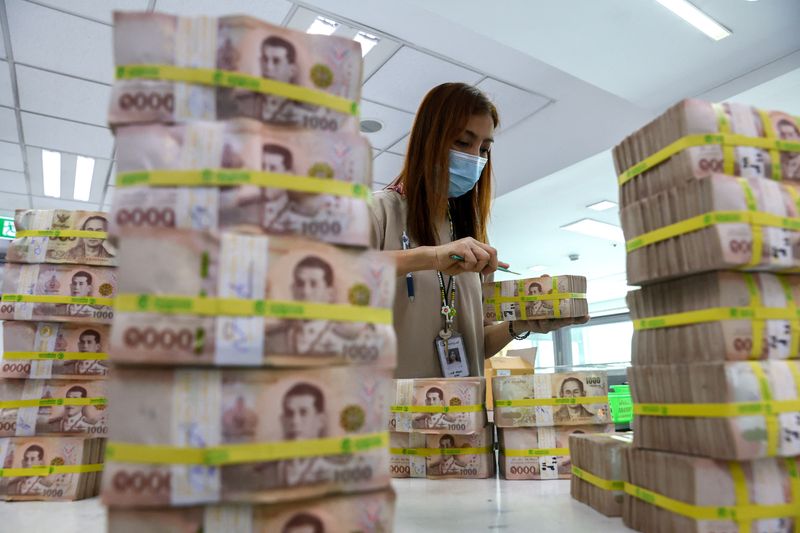
BENGALURU/JOHANNESBURG (Reuters) - Emerging market currencies will take well into next year to start making noticeable gains against a retreating U.S. dollar, despite a growing view the interest rate cycle has peaked, a Reuters poll of FX strategists showed.
After getting battered for most of 2023, emerging market (EM) currencies have made modest gains against the dollar after the Federal Reserve held interest rates steady last week and data suggested the U.S. economy might finally be slowing.
That dollar weakening trend was likely to hold in the near-term as a majority of analysts in the Nov. 3-7 Reuters poll expected the dollar to trade lower by year-end.
However, with most EM central banks expected to follow the Fed and cut rates next year, their respective currencies were unlikely to recoup double-digit losses they have accumulated over the past couple of years.
"We've seen already some pretty sharp gains last week, but the recent gains aren't extending because there is still uncertainty about the Fed ... and at the same time the U.S. is still performing better than most other economies," said Mitul Kotecha, Head of FX & EM Macro Strategy Asia at Barclays.
"So it's difficult to see the EM currencies recoup some of the sharp losses that we've seen in the last few months. That said, we do expect some gains, it's just going to be a bit more of a gradual path."
This excludes the Russian rouble, which has lost 27% this year, and the Turkish lira, which is down 52%.
Only a few Asian currencies, such as the Indian rupee, Thai baht, and South Korean won were expected to recoup their losses by late 2024. In the near term, the rupee is forecast to trade in a narrow range.
Although EM currencies gained at the beginning of 2023 and investors brimmed with positivity after China's post-COVID reopening, economic performance in the world's second largest economy has been mostly underwhelming.
Indeed, the tightly-controlled Chinese yuan was forecast to only recoup slightly more than half of its 2023 losses. It has fallen over 5% this year.
The South African rand is set to gain less than 1% while the Turkish lira is set to fall around 16% in a year.
Latin America's stand-out currencies, the Brazilian real and Mexican peso, have gained around 8% and 11% respectively since the year began, although some of their central banks have already begun cutting rates.
The peso is expected to lose around 4.5% while the real is seen losing just over 2% in 12 months.
"Easier Fed monetary policy should also take some pressure off select emerging market currencies in the second half of next year," noted Nick Bennenbroek, international economist at Wells Fargo.
(For other stories from the November Reuters foreign exchange poll:)

By Michael S. Derby
NEW YORK (Reuters) - U.S. total household debt levels rose in the third quarter amid strong growth in credit card borrowings fueled by a hot economy, although there were mounting signs some borrowers are facing increased challenges managing the money they've borrowed, a report from the Federal Reserve Bank of New York released on Tuesday said.
In its quarterly report, the bank said overall debt levels increased by 1.3% during the third quarter to a level of $17.29 trillion. And in that rise, credit card borrowing levels rose by 4.7% to $1.08 trillion, with the bank noting that over the last year there's been a $154 billion increase in these types of balances, the largest since the New York Fed began tracking such data in 1999.
“Credit card balances experienced a large jump in the third quarter, consistent with strong consumer spending and real GDP growth,” Donghoon Lee, a New York Fed economist, said in a press release accompanying the report.
U.S. economic activity in the third quarter took place at a blistering pace few economists expect to be repeated in the final three months of the year. Overall activity rose at a well- above-trend pace of 4.9%, the fastest such gain in two years, in an environment where the Fed was raising interest rates and overall borrowing costs broadly rose.
The surge in borrowing costs has waylaid activity in the housing market amid the highest mortgage rates in decades, and the landscape has fueled worries that many Americans will struggle to manage their debt, especially as high levels of savings during the coronavirus pandemic run down. The New York Fed report found credit issues are rising, albeit from low levels.
STORM CLOUDS
Overall debt delinquency increased by 3% as of September from a 2.6% increase in the second quarter, the report said, while still standing below the 4.7% delinquency rate seen in the fourth quarter of 2019, just ahead of the pandemic’s arrival.
The overall flow of debt moving into delinquency stood at 1.28% in the third quarter, compared with 0.94% in the third quarter of last year. The report said increases in credit card delinquency rates were most pronounced for thirtysomething borrowers.
“The continued rise in credit card delinquency rates is broad-based across area income and region, but particularly pronounced among millennials and those with auto loans or student loans,” the economist noted.
Daniel Silver, an economist with J.P. Morgan, said that in terms of the rising credit issues, "this looks consistent with a softening trajectory for consumer spending, but not a particularly bad one."
In a blog posting that came with the report, New York Fed economists said the rise in credit woes is puzzling given the generally solid state of the economy.
Pinning an explanation on the delinquency rise is “difficult” and “whether this is a consequence of shifts in lending, overextension, or deeper economic distress associated with higher borrowing costs and price pressures is an important topic for further research," the post said.
In comments made on Monday, Fed governor Lisa Cook said she wasn't worried about debt issues on the household level, while noting "of course, we are seeing emerging signs of stress for households with lower credit scores, and individual borrowers may struggle with debt burdens in the face of economic hardships."
The New York Fed report found that overall student loan debt rose by $30 billion to $1.6 trillion in the third quarter. The bank’s data on this type of borrowing arrives after the restart of student loan debt payments, which had been put on hold during the pandemic. The resumption of those payments has been a source of concern, but recent New York Fed research has suggested only modest economic headwinds are likely to result.
Newly created mortgages totaled $386 billion in the third quarter, while the overall level of mortgage balances rose by $126 billion to $12.14 trillion as of the end of September.
The report said auto loan balance were up by $13 billion in the third quarter at $1.6 trillion, “continuing the upward trajectory that has been in place since 2011.”
By Joice Alves and Danilo Masoni
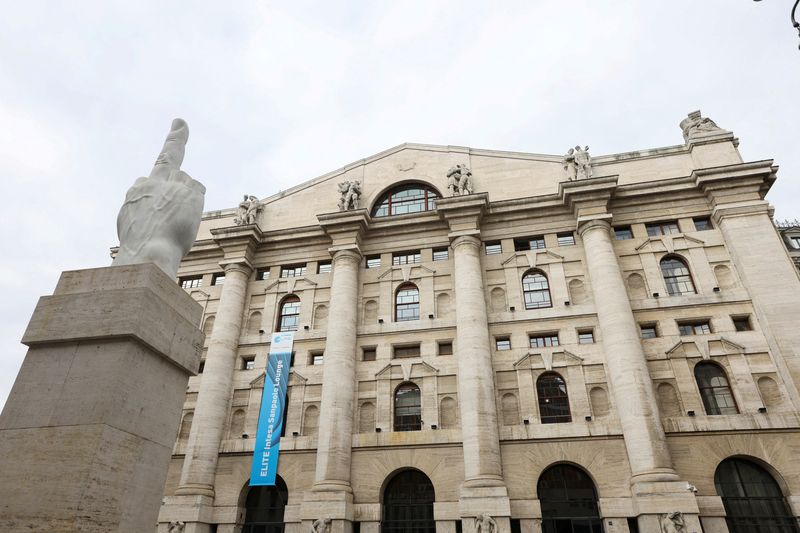
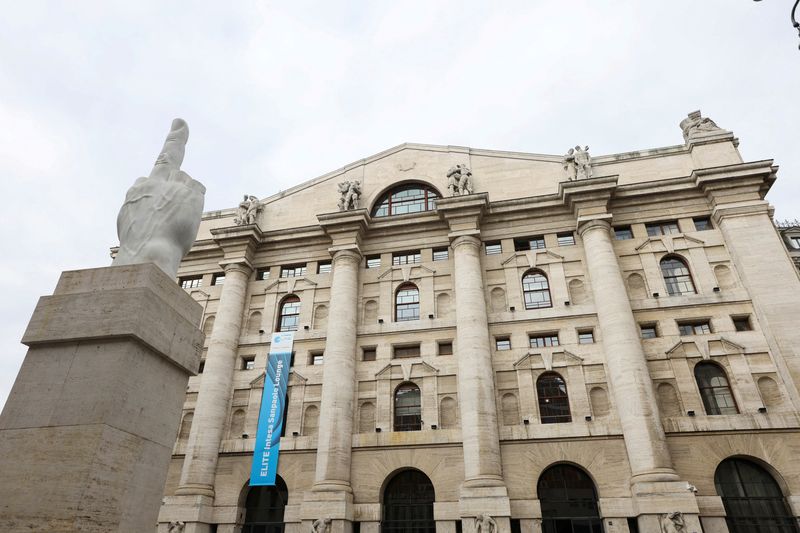
LONDON/MILAN (Reuters) - Italian stocks are trading at their deepest discount in 35 years compared to world shares as investors fret over the fiscal outlook in one of Europe's most indebted economies, although some reckon the shares are too cheap to ignore.
While Italian equities have historically been cheaper than global peers, their discount has now widened to 50%, the biggest gap since 1988, and has held at that level for a couple of months. This is twice as wide as the average gap seen over the past two decades.
Yes, Milan's blue-chip index has rallied this year as it is geared heavily towards banking stocks that have benefited from the steepest rise in euro area interest rates on record.
But domestically focused companies in sectors such as consumers and industrials have been hurt by an aging population, debt at over 100% of GDP and two decades of near-zero economic growth that was only briefly interrupted by a post-COVID rebound.
That has left Italian equities overall more cheaply valued than even battered UK shares, which are trading at a 33% discount to global peers.
Italy's domestic stock market "is not particularly an area I want to be exposed to," said Chris Hiorns, head of multi-asset and European equities at EdenTree, citing concern about Italy's fiscal outlook.
Recent cuts to economic growth and increases to budget deficit forecasts have revived concern about potential sovereign stress, pushing the premium investors demand to hold 10-year Italian bonds over safer Germany above 200 basis points (bps) last month.
That gap has narrowed but remains vulnerable. A test looms on Friday when Fitch reviews Italy's BBB credit rating and stable outlook.
"A change in the outlook cannot be ruled out, given lower growth, higher interest rate expenses and the deterioration in Italy's fiscal position," Barclays said in a note.
Goldman Sachs estimates that each 10 bps rise in sovereign spreads takes around 2% off Italian bank shares and 1.5% off the FTSE MIB index. It advises avoiding the blue chip index after its outperformance.
Italy's funding needs are being further complicated by its difficulties in meeting conditions set by the European Commission in return for billions of euros of post-pandemic recovery funds.
Conflict in Ukraine and in the Middle East meanwhile threaten to spark a fresh surge in energy prices and weaken growth.
The number of outstanding units in BlackRock (NYSE:BLK)'s iShares MSCI Italy ETF has more than halved to 8.6 million from 18.9 million in October 2021. Its MSCI Europe ETF has seen the number of units fall by less than 10% over the same period.
"RIDICULOUS MULTIPLES"
While Italy's weak economic outlook and high debt suggest a significant re-rating of shares is unlikely anytime soon, investors expected some clawing back given just how deeply discounted some parts of the market are.
The FTSE Italia Star index, tracking companies with a market cap of up to 1 billion euros ($1.07 billion), has fallen 10% so far in 2023 after last year's near 30% plunge. By comparison, the FTSE mid-cap index is down 5% this year.
Smaller Italian stocks have been hit by outflows due to the end of a government-sponsored scheme to promote investment into small-sized domestic stocks, said Giuseppe Sersale, strategist and portfolio manager at Anthilia in Milan.
"Many companies are trading on ridiculous multiples. A window of value is opening up on small caps, which is worth seizing," he said.
Andrea Scauri, senior portfolio manager at asset manager Lemanik, said high visibility on earnings due to elevated rates and stronger balance sheets make Italian banks less vulnerable to debt jitters than before.
"If the spread widens, this will have a short-term impact," he said.
Scauri owns shares in smaller Italian lenders such as Banco BPM and Monte dei Paschi, whose cheaper valuations make them more attractive than larger banks, he said.
Banco BPM shares are trading at around 0.55 times its price-to-book value and Monte dei Paschi at 0.39 times, much cheaper than UniCredit, Italy's No.2 lender by market value and trading at 0.66 times, according to LSEG Datastream.
UniCredit shares are up almost 80% this year and among the best performing euro zone banking shares.
Fidelity International portfolio manager Alberto Chiandetti, said he was chasing opportunities in battered industrials and consumer sectors in the FTSE Italia Star index.
"In many cases, valuations have already factored in the economic slowdown, while not reflecting the value and growth that many of these companies will have in the coming years," he added.
By Joice Alves and Danilo Masoni
LONDON/MILAN (Reuters) - Italian stocks are trading at their deepest discount in 35 years compared to world shares as investors fret over the fiscal outlook in one of Europe's most indebted economies, although some reckon the shares are too cheap to ignore.
While Italian equities have historically been cheaper than global peers, their discount has now widened to 50%, the biggest gap since 1988, and has held at that level for a couple of months. This is twice as wide as the average gap seen over the past two decades.
Yes, Milan's blue-chip index has rallied this year as it is geared heavily towards banking stocks that have benefited from the steepest rise in euro area interest rates on record.
But domestically focused companies in sectors such as consumers and industrials have been hurt by an aging population, debt at over 100% of GDP and two decades of near-zero economic growth that was only briefly interrupted by a post-COVID rebound.
That has left Italian equities overall more cheaply valued than even battered UK shares, which are trading at a 33% discount to global peers.
Italy's domestic stock market "is not particularly an area I want to be exposed to," said Chris Hiorns, head of multi-asset and European equities at EdenTree, citing concern about Italy's fiscal outlook.
Recent cuts to economic growth and increases to budget deficit forecasts have revived concern about potential sovereign stress, pushing the premium investors demand to hold 10-year Italian bonds over safer Germany above 200 basis points (bps) last month.
That gap has narrowed but remains vulnerable. A test looms on Friday when Fitch reviews Italy's BBB credit rating and stable outlook.
"A change in the outlook cannot be ruled out, given lower growth, higher interest rate expenses and the deterioration in Italy's fiscal position," Barclays said in a note.
Goldman Sachs estimates that each 10 bps rise in sovereign spreads takes around 2% off Italian bank shares and 1.5% off the FTSE MIB index. It advises avoiding the blue chip index after its outperformance.
Italy's funding needs are being further complicated by its difficulties in meeting conditions set by the European Commission in return for billions of euros of post-pandemic recovery funds.
Conflict in Ukraine and in the Middle East meanwhile threaten to spark a fresh surge in energy prices and weaken growth.
The number of outstanding units in BlackRock (NYSE:BLK)'s iShares MSCI Italy ETF has more than halved to 8.6 million from 18.9 million in October 2021. Its MSCI Europe ETF has seen the number of units fall by less than 10% over the same period.
"RIDICULOUS MULTIPLES"
While Italy's weak economic outlook and high debt suggest a significant re-rating of shares is unlikely anytime soon, investors expected some clawing back given just how deeply discounted some parts of the market are.
The FTSE Italia Star index, tracking companies with a market cap of up to 1 billion euros ($1.07 billion), has fallen 10% so far in 2023 after last year's near 30% plunge. By comparison, the FTSE mid-cap index is down 5% this year.
Smaller Italian stocks have been hit by outflows due to the end of a government-sponsored scheme to promote investment into small-sized domestic stocks, said Giuseppe Sersale, strategist and portfolio manager at Anthilia in Milan.
"Many companies are trading on ridiculous multiples. A window of value is opening up on small caps, which is worth seizing," he said.
Andrea Scauri, senior portfolio manager at asset manager Lemanik, said high visibility on earnings due to elevated rates and stronger balance sheets make Italian banks less vulnerable to debt jitters than before.
"If the spread widens, this will have a short-term impact," he said.
Scauri owns shares in smaller Italian lenders such as Banco BPM and Monte dei Paschi, whose cheaper valuations make them more attractive than larger banks, he said.
Banco BPM shares are trading at around 0.55 times its price-to-book value and Monte dei Paschi at 0.39 times, much cheaper than UniCredit, Italy's No.2 lender by market value and trading at 0.66 times, according to LSEG Datastream.
UniCredit shares are up almost 80% this year and among the best performing euro zone banking shares.
Fidelity International portfolio manager Alberto Chiandetti, said he was chasing opportunities in battered industrials and consumer sectors in the FTSE Italia Star index.
"In many cases, valuations have already factored in the economic slowdown, while not reflecting the value and growth that many of these companies will have in the coming years," he added.
By Wayne Cole
SYDNEY (Reuters) -Australia's central bank raised interest rates to a 12-year high on Tuesday, ending four months of steady policy, but left it open on whether even more tightening would be needed to bring inflation to heel.
Wrapping up its November policy meeting, the Reserve Bank of Australia (RBA) raised its cash rate by 25 basis points to 4.35%, saying recent data suggested there was a risk inflation would remain higher for longer.
"Whether further tightening of monetary policy is required to ensure that inflation returns to target in a reasonable timeframe will depend upon the data and the evolving assessment of risks," RBA Governor Michele Bullock said in a statement.
This was a step back from the October decision which stated that some further tightening "may be required", and was taken by markets as a sign this might be the last hike of the cycle.
As a result, the local dollar slid 0.8% to $0.6435 and bond futures rallied as investors lengthened the odds on a further rise in December.
"It was a dovish hike...it's not pointing to any immediate need for a follow-up," said Rob Thompson, rates strategist at RBC Capital Markets.
"You'd think they'd have opened the door to a bit more than this, but they are just trying to do as little as possible. The hurdle to hike is high."
Markets had favoured a move this week given policy makers had warned they had little tolerance for inflation which had surprised on the high side in the third quarter. [AU/INT]
INFLATION PROVES STUBBORN
This was Bullock's first rate change since taking over as governor in September, and could go some way to burnish her inflation-fighting credentials.
Economic growth has already slowed to a two-year low of 2.1% and the RBA sees it approaching 1% in 2024 as the full impact of higher rates bites.
Rates have now risen by 425 basis points since May last year, adding thousands of dollars to average mortgage repayments in easily the most aggressive cycle on record for the RBA.
A hike had seemed possible since consumer price inflation topped forecasts in the third quarter to run at 5.4%, well above the RBA's long term target range of 2-3%.
Bullock noted the central bank's own forecasts for CPI had been lifted to 3.5% by the end of 2024, from 3.3%, while inflation would only reach the top of the target band by the end of 2025.
The hike puts the RBA in the odd position of being one of the very few developed world central banks still tightening, with markets convinced rates in the United States, Canada and Europe have peaked.
The RBA Board had been prepared to tolerate a somewhat slower decline in inflation in order to keep Australia at full employment, an economic feat not achieved since the 1950s.
Their patience ran out as inflation proved stickier than hoped in the service sector, while house prices rebounded to record highs and unemployment stayed historically low at 3.6%.
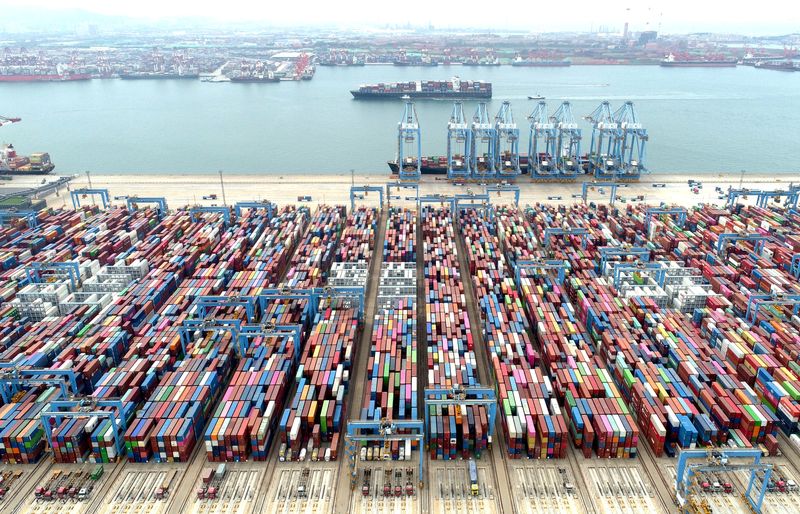
BEIJING (Reuters) -China's imports unexpectedly grew in October while exports contracted at a quicker pace, in a mixed set of indicators that showed the recovery in the world's second-largest economy remains uneven amid multiple challenges at home and abroad.
Recent indicators suggest Beijing's support measures since June are helping bolster a tentative recovery, although a protracted property crisis and soft global demand continue to dog policymakers heading into 2024.
Exports shrank 6.4% from a year earlier in October, customs data showed on Tuesday, faster than a 6.2% decline in September and worse than a 3.3% fall expected in a Reuters poll. Imports rose 3.0%, dashing forecasts for a 4.8% contraction and swinging from a 6.2% fall in September. Imports snapped 11 straight months of decline.
"The figures are in contrast to market expectations. The bad exports data may hit market confidence as we had expected the supply chain of exports to recover," said Zhou Hao, economist at Guotai Junan International.
"The significant improvement in imports may come from rising domestic demand, in particular a demand to replenish stocks."
The Baltic Dry Index, a bellwether gauge of global trade, hit its lowest since December 2020 in October, due to congestion in North American and European ports.
However, in a sign trade is finding some footing, South Korean exports to China fell at their slowest pace in 13 months in October.
China posted a trade surplus of $56.53 billion in October, compared with a $82.00 billion surplus expected in the poll and $77.71 billion in September.
Analysts say it is too early to tell whether recent policy support will be enough to shore up domestic demand, with property, unemployment and weak household and business confidence threatening a sustainable rebound.
China's manufacturing activity unexpectedly contracted in October, data showed last week, complicating policymakers' efforts to revive growth.


 한국어
한국어
 Tiếng Việt
 中文
中文